
Strategic Planning Is a Boundary-Setting Tool: Why Employee Engagement Belongs in Your 2026 Plan
This time of year, strategic planning is everywhere. New goals. New dashboards. New urgency to “ramp back up.”
But here’s something to think about in your planning process: strategic plans create boundaries, whether we intend them to or not. What we measure shapes behavior. What we prioritize signals what matters. And what we leave out quietly tells people what doesn’t.
I once worked at an agency that embedded employee engagement directly into its strategic plan. One of our core priorities was ensuring an engaged, empowered, high-performing workforce that could support improvements in community health. Using a Results-Based Accountability framework, one of our indicators was simple but powerful: Percent of Employees Engaged. In 2017, our baseline was 64%. Our goal was 75%. But a harsh reality is that more than 50% of employees are disengaged.
Strategic plans shape decisions, leadership behavior, resource allocation, and accountability. They also reinforce a truth public health has long understood: healthy communities depend on healthy, supported people doing the work.
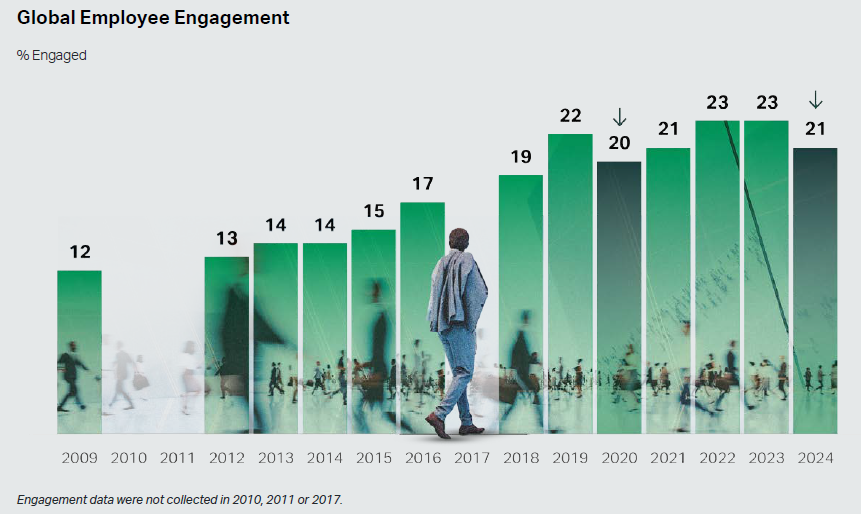
Gallup, State of the Global Workplace 2025
📊 Data That Matters: Engagement is Good for Business
Employees who feel engaged and supported are 17% more productive, have 18-43% lower turnover (industry-dependent), and 81% lower absenteeism, yet many strategic plans still track outputs and finances without tracking workforce health. → HR Cloud, 20 Employee Engagement Statistics You Need to Know
In 2017, when employee engagement was rising, just 53% of companies reported measuring employee engagement in the past year. → DecisionWise, The Truth About Employee Engagement Measurement Practices
Global employee engagement fell two points to 21% last year, with lost productivity costing the global economy $438 billion. → Gallup, State of the Global Workplace 2025
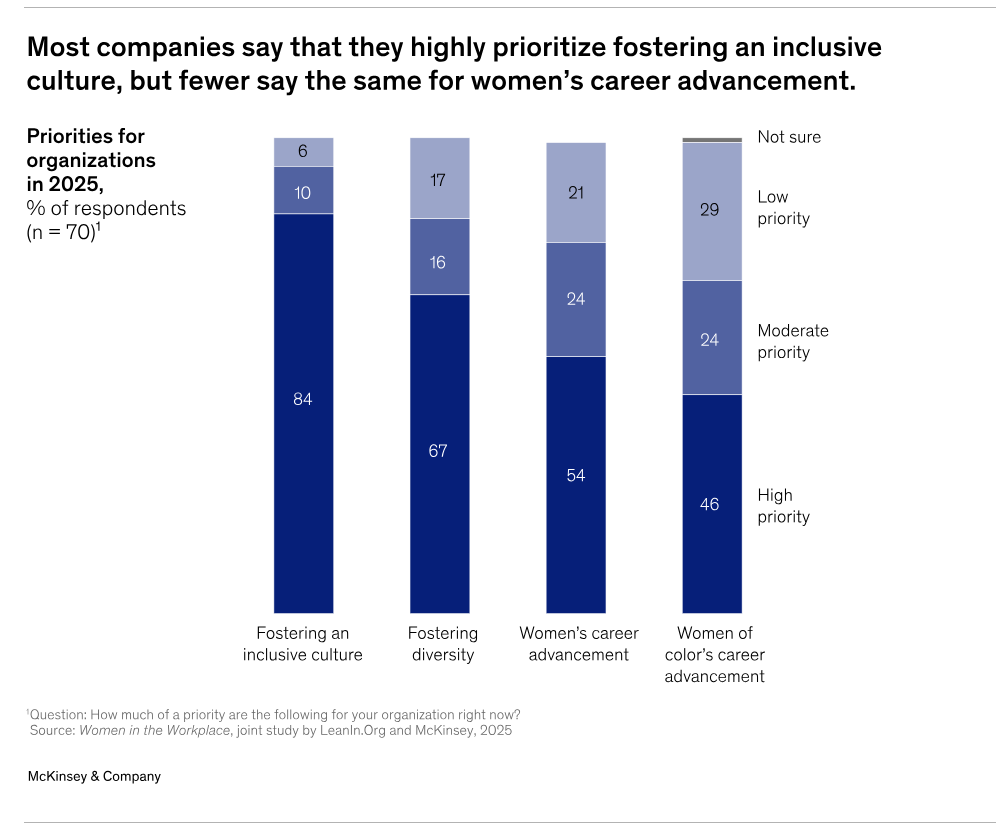
McKinsey & Company, Women in the Workplace 2025
⚖️ Equity & Inclusion: The Purpose Gap
Women are often overlooked in organizational priorities and career advancement pipelines, leading to continued disparities in sponsorship, mentorship, and representation across corporate roles. → McKinsey, Women in the Workplace 2025
AI is changing the way we work, and employees are feeling the shift. In one survey, 75% of employees were concerned that AI will make certain jobs obsolete, while 65% said they were anxious about AI replacing their job. This anxiety is fueled by lack of guidance on AI use and inadequate training. → EY, New EY research reveals the majority of US employees feel AI anxiety amid explosive adoption
Employees want to experience meaning and purpose at work, but 67% of employees say that their organization's purpose is defined, and just 41% say that their organization's purpose is tied to a common goal. → Deloitte Insights, Mind the Purpose Gap
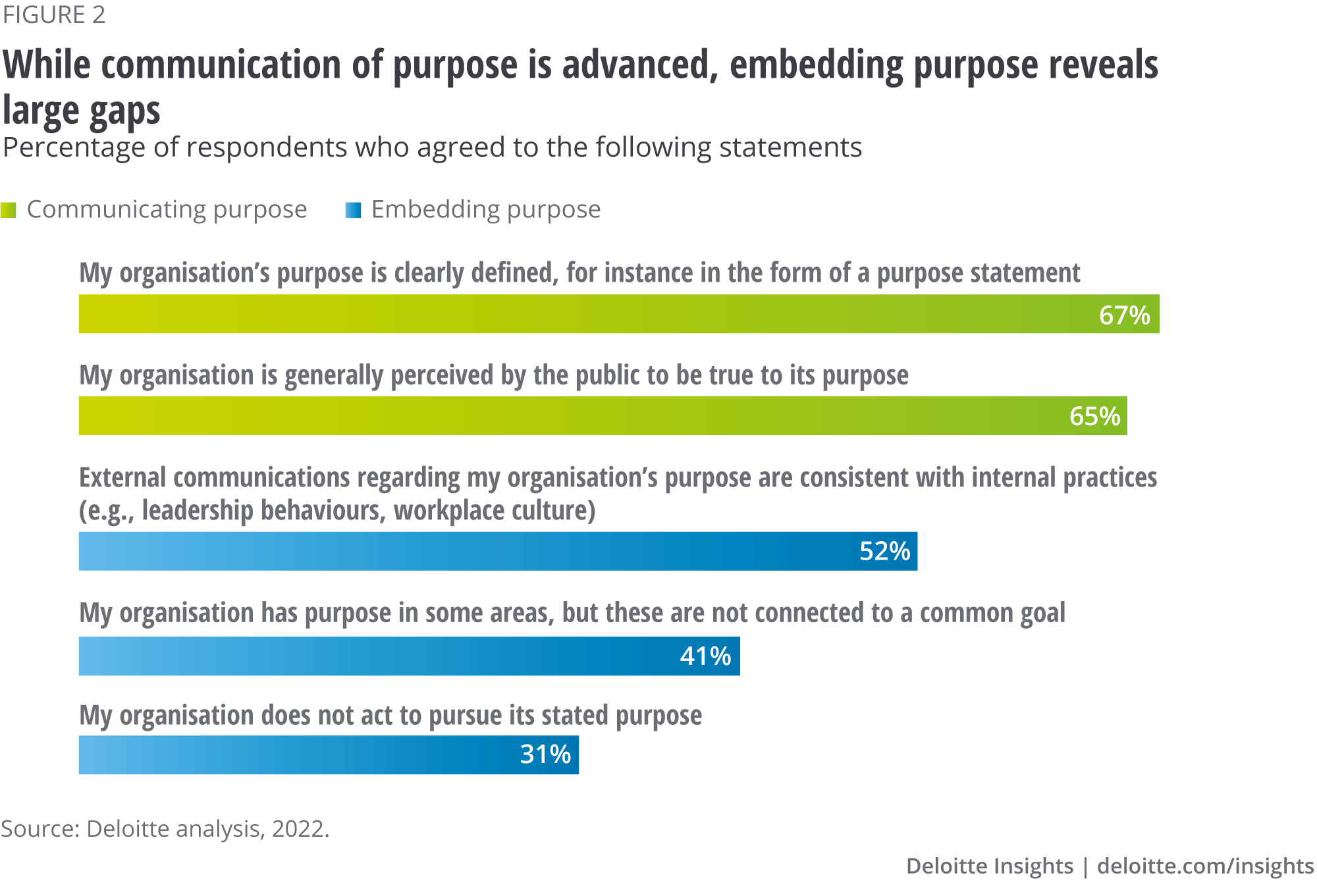
Deloitte Insights, Mind the Purpose Gap
🔲 Boundary Highlight: Structural Boundaries
Strategic plans create structural boundaries. They define what is expected, what is rewarded, and what is tolerated.
When engagement, psychological safety, and wellbeing are named explicitly, leaders gain permission (and responsibility) to protect capacity, set realistic timelines, and challenge harmful norms like constant urgency or overwork.
When they’re not? The boundary defaults to “do more with less.”
To create better systems, take a moment to ask three key questions, and then be prepared to act on them:
How is employee engagement and wellbeing reflected in our organization's plans and goals?
If we have collected data on employee engagement, what action did we take to respond to what we learned?
How can we include employees in the strategic planning process, from priority setting to implementation to monitoring?
🧾Law & Policy: Plans are a Policy Tool
In public health, strategic planning is often tied to accreditation, funding requirements, and accountability frameworks that explicitly connect workforce capacity to population outcomes.
Outside of public health, many organizations lack these guardrails, yet still operate under employment laws, occupational safety standards, and duty-of-care obligations that intersect directly with workload, stress, and burnout.
Strategic plans are an important policy tool that can mitigate risk, increase productivity, reduce turnover and absenteeism, and create healthier workplaces, especially when they include the employee experience among the priorities.
✅Actions You Can Take
🧠 Individual
Review your organization’s strategic plan and ask: how is my work connected to this plan? Are my purpose and my organization's purpose aligned?
Keep a record of how your work accomplishments have helped you to grow professionally while also advancing some part of the agency's purpose.
🏢 Organizational
Include employee engagement, psychological safety, or workload sustainability as explicit goals with benchmarks, not just aspirational language.
Pair performance metrics with capacity metrics to prevent burnout from being treated as a personal issue.
🌍 Systemic
Normalize workforce wellbeing as a legitimate outcome of organizational success by dedicating resources to meaningful wellbeing programs and policies.
Learn from public health and prevention-focused models that treat people as infrastructure, not expendable inputs.
💭 Closing Thought
My grandpa used to say "Plan your work, then work your plan."
If we want healthier organizations - and healthier communities - we have to plan for them on purpose.
Interested in how I can help your team with strategic planning that includes employee engagement? Book a discovery call.